Beyond the Protocol: What Makes an Exceptional EMS Clinician?
Beyond the Protocol: Brinker Hoffman and David Manavi on Becoming an Exceptional EMS Clinician
Emergency medical services can teach a provider how to obtain vital signs, interpret a cardiac rhythm, manage an airway, administer medications, and follow a protocol. But those abilities alone do not make someone an exceptional clinician.
Exceptional practice develops between technical competence and human judgment.
Paramedics Brinker Hoffman and David Manavi explore what today’s EMS professionals need to succeed: hands-on education, communication, curiosity, clinical judgment, humility, mentorship, and emotional resilience.
Their message is clear. Earning a certification establishes a foundation. Becoming genuinely good at the job is an active, lifelong process.
Education Must Connect Knowledge With Practice
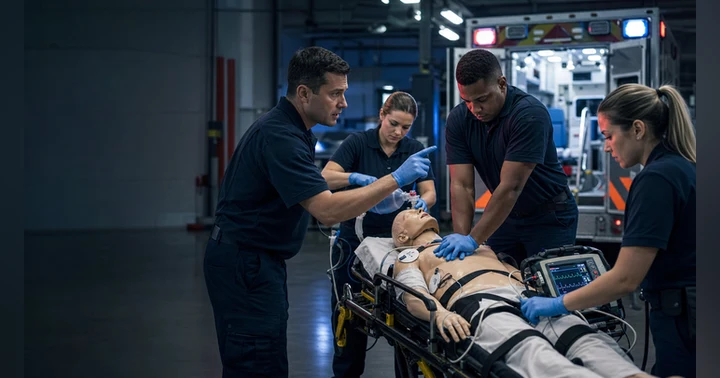
EMS education has changed significantly. New providers learn about tools and treatments that were not routinely available to earlier generations, including capnography, CPAP, blood products, advanced decision support, and a deeper understanding of pathophysiology.
At the same time, many programs provide less clinical exposure and practical testing than providers once received. Hoffman recalls an educational model built not only around minimum clinical hours but also required patient contacts. Students remained in emergency departments and ambulances until they encountered specific conditions and completed particular skills.
Those hours accomplished more than checking boxes. They allowed students to lead with “training wheels.” They learned to manage routine calls, communicate with difficult personalities, recognize subtle changes, and function within healthcare before practicing independently.
Manavi describes more than 800 hours of clinical experience across ambulances, emergency departments, intensive care, operating rooms, and mental health settings. That exposure revealed how different professionals approach the same patient.
The COVID-19 pandemic disrupted much of that clinical access. Online education kept programs operating and made learning available to people who might otherwise have been excluded by scheduling or geography. Both Hoffman and Manavi see real value in distance learning.
But accessibility cannot come at the expense of practical ability.
“At its core, this is a technical job,” Manavi explains. Knowing the anatomy of an airway is valuable, but a clinician must still be able to manage that airway when a patient cannot breathe.
The goal is not to choose between academic knowledge and technical skill. EMS needs both.
A technician knows how to perform a procedure. A clinician understands when it is needed, when it may help, when it may cause harm, and when a different approach is better. Judgment and understanding transform the skill from a memorized task into patient care.
Soft Skills Are Clinical Skills
Communication, empathy, diplomacy, conflict management, and scene presence are sometimes described as “soft skills.” That label can make them sound secondary to medication calculations or cardiac interpretation.
They are not secondary.
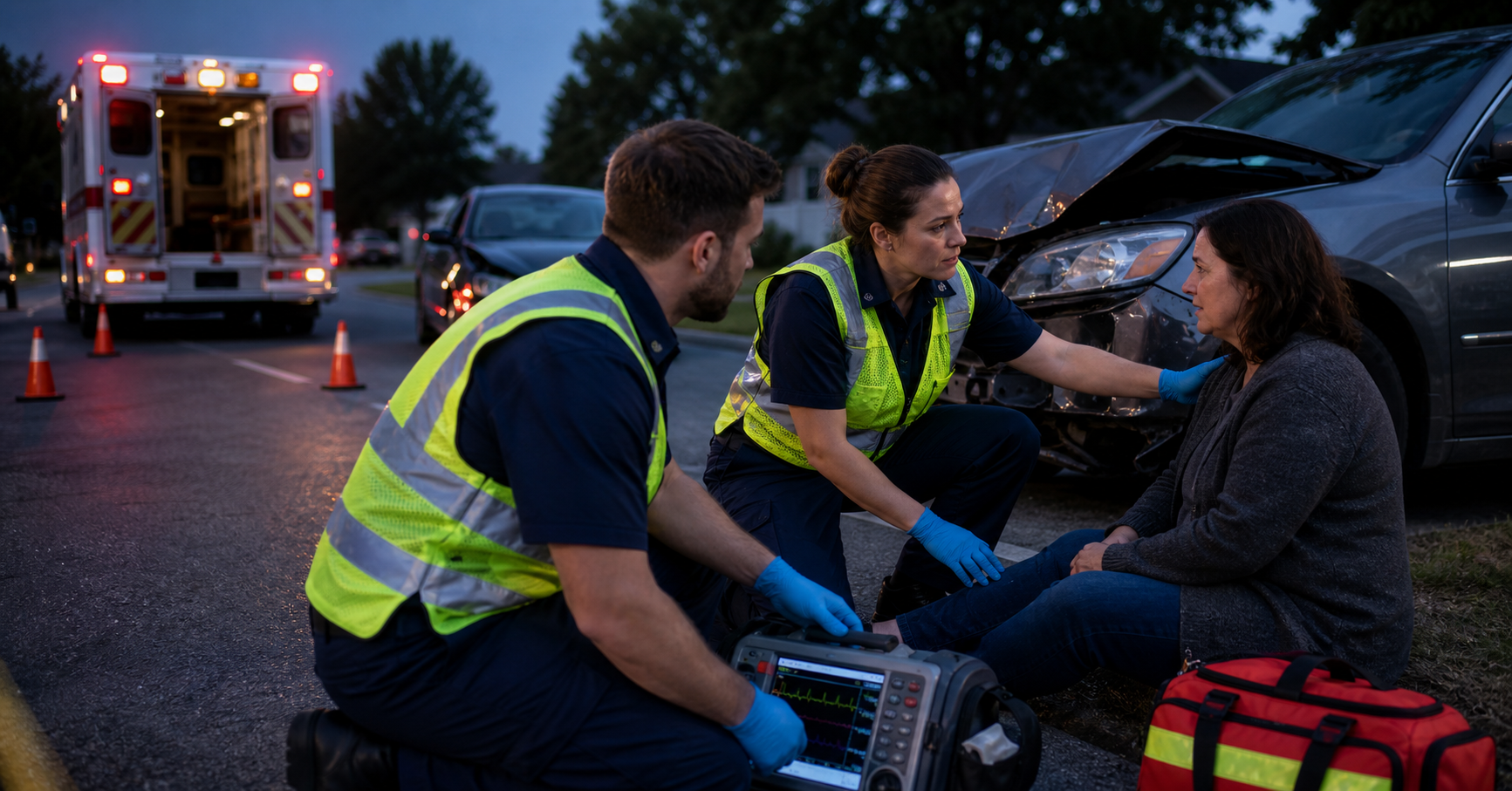
Most EMS calls are not immediate life-or-death emergencies. Providers regularly encounter frightened families, anxious patients, people experiencing mental illness, frustrated caregivers, and individuals who may be angry, demanding, or unable to explain what is wrong.
On those calls, communication can determine whether the provider obtains an accurate history, recognizes a hidden emergency, gains consent, or prevents a confrontation.
Manavi speaks candidly about communication as a learned rather than natural strength. Through experience, study, and deliberate practice, he learned how posture, tone, and presence affect a scene. A calm, confident provider can give frightened people something to hold onto: the belief that someone understands what is happening and has a plan.
That calm also creates better clinical information. An anxious patient may not be able to answer the pivotal question until the provider lowers the temperature of the room.
Hoffman argues that no initial EMS program can spend enough time on every communication or leadership skill. Programs cannot last forever. The responsibility therefore shifts to the provider.
Education does not end when the certification card arrives. Clinicians must continue learning how to write clearly, speak with patients, manage conflict, lead teams, and connect with strangers.
Even an unpleasant patient may have a legitimate emergency. Manavi recalls encountering a woman who responded to an offer of help with anger and entitlement. The challenge was to maintain composure, look beyond her behavior, and continue investigating whether she had a medical problem.
Professionalism is not demonstrated only when patients are gracious. It is demonstrated when they are not.
Experience Should Create Curiosity
Why do some providers become exceptional while others remain average for decades?
Hoffman describes people who accumulate “10 years’ worth of their first year of experience.” They continue showing up, but their thinking does not expand. They repeat the same comfortable patterns rather than learning from new situations.
Exceptional clinicians maintain what Hoffman calls an “elasticity of mind.” They remain interested in the work. Continuing education becomes more than a requirement for recertification; it becomes a way to challenge assumptions and keep curiosity alive.
That curiosity appears during patient assessment.
A protocol-driven provider may hear “fall” and begin following a trauma pathway. An exceptional clinician notices when the story does not fit. Why is the patient unusually pale? Did the fall cause the illness, or did an illness cause the fall? Does a reported seizure match the patient’s presentation? Could the real problem be cardiac, respiratory, metabolic, or vascular?
Experienced clinicians develop intuition, but intuition is not magic. It is pattern recognition built from education, repetition, reflection, and attention.
The danger comes when confidence grows faster than competence.
Hoffman and Manavi encourage new providers to step forward and lead, but also to accept feedback in real time. On complex scenes, an inexperienced clinician who refuses help can create chaos and damage relationships with partner agencies. A developing clinician must be willing to say, “Give me a moment,” think through the problem, listen to others, and change direction when new information emerges.
Humility is not uncertainty. It is the discipline to recognize that patient care matters more than protecting an image of authority.
Technology Is a Tool, Not a Substitute for Thinking
EMS professionals now carry access to protocol applications, search engines, medication databases, and artificial intelligence. These tools can retrieve information quickly, identify drug interactions, support documentation, and help providers review unfamiliar conditions.
They can also produce misleading answers.
The value of decision support depends on the provider’s ability to ask the right question, evaluate the response, and recognize when it conflicts with the patient. Without the fundamentals, a clinician may not recognize a confident but incorrect result.
Technology should support assessment, not replace it.
Hoffman and Manavi express concern about providers becoming hesitant to touch patients or relying entirely on monitors. A patient who is sitting upright and talking may still be seriously ill. “Sick or not sick” is a starting point, not the end of an assessment.
Clinicians must still observe, palpate injuries, check pulses, listen to lung sounds, obtain a meaningful history, and examine the environment. The monitor offers data, not the complete story.
Protocols require the same active relationship. Providers need to know them and periodically review them, even when no update has been issued. An application can locate a protocol, but searching for basic direction during a time-critical emergency is not the same as being prepared.
Resilience Requires Both Detachment and Reflection
No education can fully prepare someone for the emotional range of EMS. Providers witness death, fear, cruelty, grief, humor, kindness, and the strange unpredictability of human life—sometimes during the same shift.
Hoffman describes the need to compartmentalize carefully while working. Providers must sometimes detach from what they are seeing because they need to perform painful or unpleasant interventions. They must absorb a difficult call and remain capable of responding to the next one.
But the compartments cannot remain sealed forever.
A sustainable career requires learning how to empty them after work, process what happened, accept support, and return to life outside the ambulance. The goal is to experience the satisfaction of doing meaningful work without remaining one devastating call away from the end of a career.
The work also leaves providers with memories worth carrying. Hoffman recalls an older woman experiencing a STEMI who remained calm, gracious, and thoughtful throughout her care. The patient’s strength became a reminder that even during exhausting stretches filled with conflict and frustration, EMS professionals still encounter extraordinary people.
Those memories can protect a provider’s sense of purpose.
Becoming Exceptional Is a Choice
Hoffman and Manavi reject the idea that time alone creates expertise. A provider does not become exceptional simply by accumulating shifts.
Growth requires participation.
Study beyond what recertification demands. Practice the physical skills. Learn from other disciplines. Watch experienced clinicians work under pressure. Ask for feedback. Develop communication deliberately. Review the calls that felt wrong. Become comfortable acknowledging when another person has a better idea.
Most importantly, remember the responsibility attached to the credential.
EMS places clinicians inside people’s homes and lives during their most vulnerable moments. Technical competence makes intervention possible. Judgment determines whether it is appropriate. Communication makes cooperation possible. Character determines how the patient experiences the encounter.
The certification may place a provider on the ambulance.
Everything that follows determines what kind of clinician that provider becomes.
Host
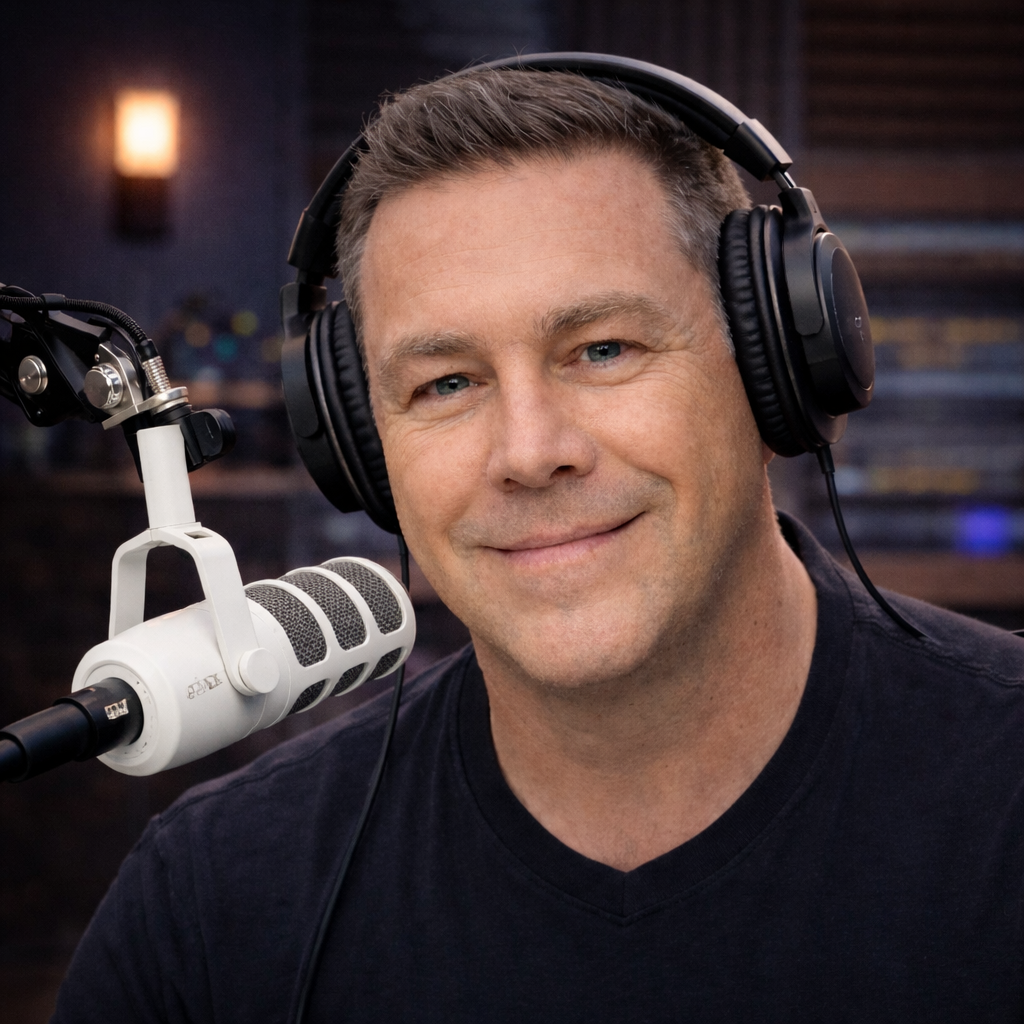
Jason Falvey, NRP, is an EMS Battalion Chief and the creator and host of the In-Service EMS Podcast. With more than 30 years in emergency medical services, he has built a career spanning frontline paramedicine, clinical quality, countywide operations, regulatory compliance, business development, and executive leadership across multiple states.
Jason’s experience in high-stakes environments began well before his EMS career. As an accomplished sailor and divemaster, he participated in underwater search-and-recovery and salvage operations in the North Atlantic. That perspective now informs In-Service, where he brings EMS professionals together for candid conversations about leadership, clinical judgment, innovation, workplace culture, and the realities of prehospital care.
Flight Paramedic & Helicopter EMS: What Every EMS Provider Should Know