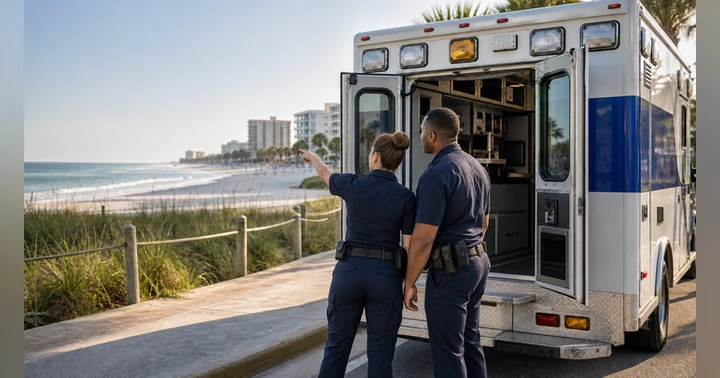
Flight Paramedic & Helicopter EMS: What Every EMS Provider Should Know
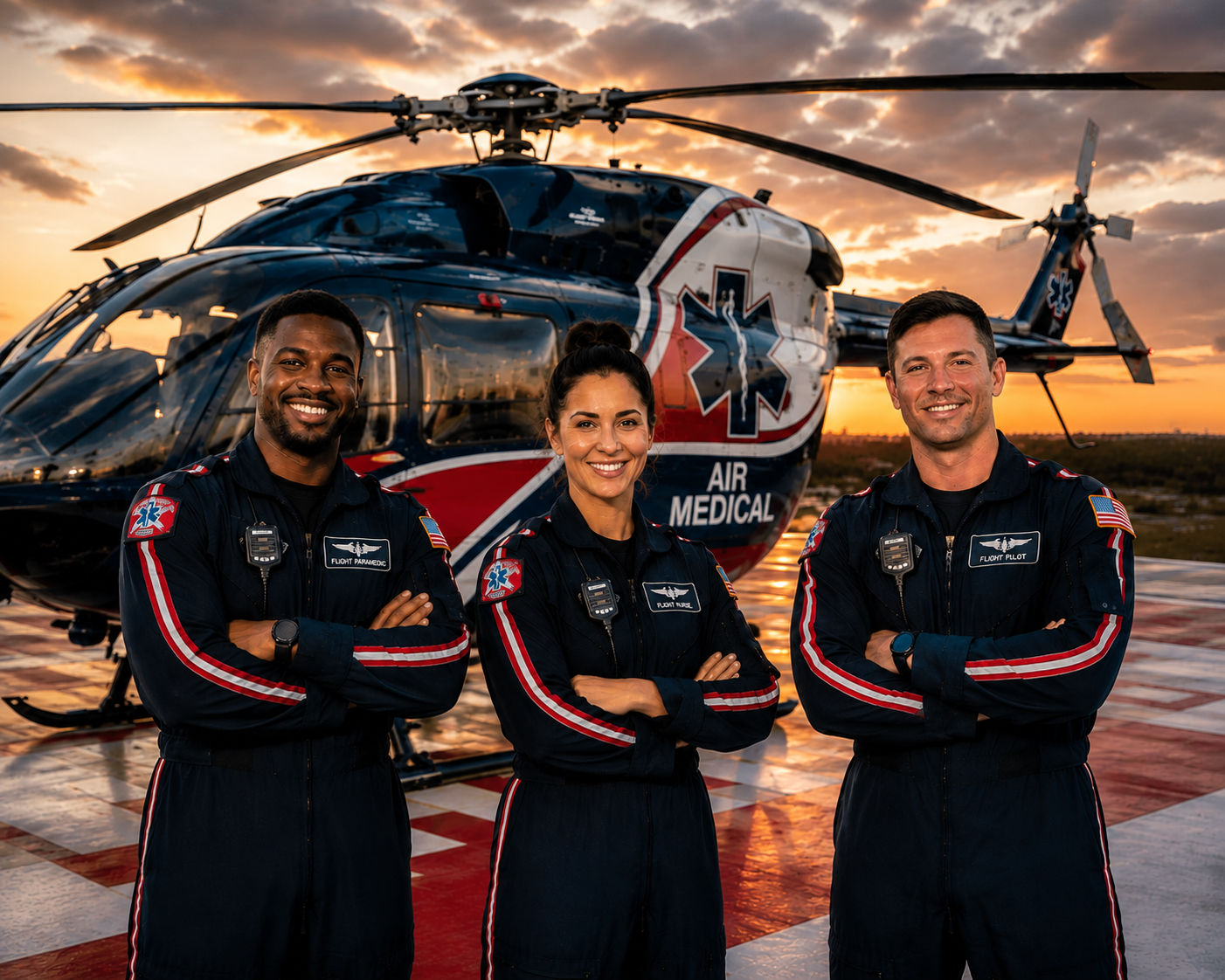
Flight Paramedic & Helicopter EMS: What Every EMS Provider Should Know
When a medical helicopter lands on an EMS scene, it immediately changes the environment. The aircraft arrives, the flight crew steps out, the patient is transferred, and within minutes they may be headed toward a trauma center or specialty facility.
But what actually determines whether a patient should fly? What does a flight crew need from the ground team? And what can ground EMS learn from the way air medical crews approach critical care, safety, communication, and leadership?
In this episode of In-Service: EMS Podcast, I sit down with Ricky Bias, an experienced paramedic whose career has taken him from rural EMS and fire-based operations to critical care transport, flight medicine, and air medical leadership.
The conversation gives us a look inside flight medicine—but many of the lessons have just as much value on the ground.
A Helicopter Is More Than a Faster Ambulance
One of the biggest misconceptions surrounding helicopter EMS is that the aircraft is simply a faster ambulance.
Sometimes, however, speed really is the intervention.
A trauma patient an hour from a Level I trauma center, a suspected large-vessel-occlusion stroke needing thrombectomy, a critically ill pediatric patient, or someone requiring specialized burn care may benefit simply from reaching definitive care significantly faster.
This becomes especially important in rural EMS.
Imagine a county operating only one or two ambulances. A patient needs a specialty center two hours away. Sending an ambulance could remove that resource from the community for four or five hours.
In those situations, air medical transport isn't only about the patient aboard the helicopter. It can also help maintain EMS coverage for the community.
The decision to fly therefore involves more than distance. Patient condition, destination, geography, available ground resources, weather, transport time, and access to definitive care all matter.
Ground EMS Is Becoming More Capable
The relationship between ground and air medicine is also changing.
Historically, flight crews brought clinical capabilities rarely found on a traditional ambulance. That gap is narrowing.
Progressive EMS systems are increasingly implementing prehospital blood products, RSI, advanced ventilator management, critical care medications, and other advanced interventions.
That's a positive development for patients.
It also changes the role of helicopter EMS. The question isn't always, What can the flight crew do that we can't?
Sometimes the better question is:
What gets this patient to the care they need in the safest and most effective way?
Clinical capability is part of that decision, but so are time, geography, resources, and destination.
Building a Better Ground-to-Air Handoff
When the helicopter lands, the flight crew doesn't need a lengthy presentation. They need information that can immediately influence patient care and transport.
Ricky discusses several critical pieces of information: approximate patient weight, airway status, major injuries or clinical concerns, medications and treatments already provided, changes in mental status or hemodynamics, and whether the patient's condition is improving or deteriorating.
Patient weight is particularly important in aviation. Crew weight, fuel, equipment, aircraft capability, and patient weight can all influence whether a mission can be safely completed. Many critical care medications are also weight based.
Another important point for ground providers: expect the flight crew to reassess your patient.
That isn't criticism of your assessment.
Every clinician assuming responsibility for a patient should perform their own evaluation. The emergency department will do the same thing when the patient arrives.
A good handoff isn't about proving you did everything correctly. It's about giving the next team what they need to continue caring for the patient.
Critical Care Sometimes Means Slowing Down
One of my favorite lessons from the conversation involves airway management and RSI.
Slow down.
The word rapid in rapid sequence intubation doesn't mean clinicians should rush through the procedure.
Consider a profoundly hypotensive trauma patient. Sedation, paralysis, and the transition to positive-pressure ventilation can significantly alter that patient's physiology. Taking the airway before adequately preparing or resuscitating the patient can make an already unstable situation worse.
Before performing RSI, clinicians need to think several steps ahead.
Has the patient been adequately resuscitated? What medications are appropriate? What happens if the first attempt fails? Is the backup airway already available?
That mindset extends far beyond airway management.
Ricky talks about developing the ability to remain calm when everything around you is chaotic. The clinician who appears controlled and deliberate can change the atmosphere of an entire scene.
Sometimes moving more deliberately allows the entire team to perform faster and more effectively.
What Ground EMS Can Learn From Aviation Safety
Some of the strongest lessons from flight medicine aren't clinical at all.
They're about safety culture.
Air medical crews work in an environment where relatively small errors can have catastrophic consequences. Safety therefore isn't something discussed only after an accident.
It is built into daily operations.
Crews inspect the aircraft, evaluate weather, conduct briefings, communicate hazards, perform walk-arounds, and debrief missions.
Perhaps most importantly, every crew member is expected to speak up.
Ricky describes an environment where any member of the crew can stop a mission because of a safety concern. It doesn't matter whether that concern comes from the pilot, nurse, or paramedic.
Ground EMS should pay attention to that philosophy.
Our risks are different, but they are significant. EMS professionals operate emergency vehicles, work alongside highway traffic, enter uncontrolled scenes, manage critically ill patients, and make high-consequence decisions—sometimes after being awake for far too long.
Fatigue is a perfect example.
EMS has traditionally celebrated working 24-, 36-, or even 48-hour stretches as evidence of toughness. Aviation approaches fatigue differently: if someone isn't capable of safely performing their job, that becomes an operational safety issue.
Maybe EMS needs to start viewing fatigue the same way.
Debrief Before the Next Problem
Flight crews also routinely debrief missions.
Most flights may produce nothing remarkable. But sometimes the crew identifies a poor landing zone, communication problem, operational delay, equipment concern, or another issue that should be addressed.
The purpose isn't assigning blame.
It's learning.
That creates a valuable question for EMS leaders: Why do we so often wait for something significant to happen before we debrief?
Debriefing doesn't have to mean a 30-minute meeting.
What worked?
What didn't?
What almost went wrong?
What should we do differently next time?
A five-minute conversation can identify problems that might otherwise remain hidden until they contribute to a serious event.
Where Is Flight Medicine Going?
We also look toward the future.
Prehospital blood programs continue to expand. ECMO is changing how some systems approach refractory cardiac arrest. Ground critical care capabilities are increasing. Drones and emerging aviation technology could eventually change how clinicians, equipment, and medical resources reach patients.
Nobody knows exactly what helicopter EMS will look like in another decade.
But one trend is clear: prehospital medicine continues to become more sophisticated.
Technology will continue to advance. Our responsibility is making sure our clinical judgment, training, leadership, and safety culture advance with it.
The Bigger Lesson
This episode is about flight medicine, but the larger lessons apply throughout EMS.
Master the fundamentals before chasing advanced skills. Experience different EMS systems when you can. Communicate clearly. Prepare for failure before it happens. Give people permission to speak up. Debrief your calls. Take fatigue seriously. And when everything around you starts moving faster, sometimes the best thing you can do is deliberately slow yourself down.
Whether you're interested in becoming a flight paramedic, regularly work with air medical crews, lead an EMS organization, or have no intention of ever leaving a ground ambulance, flight medicine offers lessons we can all use.
Listen to the full episode of In-Service: EMS Podcast: Inside Flight Medicine: What Every EMS Provider Should Know About Air Medical.

Host
Jason Falvey, NRP, is an EMS Battalion Chief and the creator and host of the In-Service EMS Podcast. With more than 30 years in emergency medical services, he has built a career spanning frontline paramedicine, clinical quality, countywide operations, regulatory compliance, business development, and executive leadership across multiple states.
Jason’s experience in high-stakes environments began well before his EMS career. As an accomplished sailor and divemaster, he participated in underwater search-and-recovery and salvage operations in the North Atlantic. That perspective now informs In-Service, where he brings EMS professionals together for candid conversations about leadership, clinical judgment, innovation, workplace culture, and the realities of prehospital care.
Training Paramedics for Chaos: Stress Inoculation in EMS