EMS Blood, Ultrasound & RSI: Expanding Prehospital Care
The Clinical Expansion of EMS: Blood, Ultrasound, and RSI with Michael Henry and Eric Falvey
EMS is changing. Paramedics are no longer defined solely by how quickly they can transport a patient or how closely they can follow a protocol. In progressive systems, they are becoming true clinical decision-makers—bringing blood products, advanced airway management, ultrasound, and increasingly sophisticated judgment directly to the patient.
Michael Henry and Eric Falvey see that evolution from complementary perspectives. Michael brings nearly two decades of experience as a field provider, educator, and clinical leader. Eric represents a newer generation of paramedics assuming greater responsibility earlier in their careers.
Together, they offer a revealing look at what happens when an EMS agency expands its clinical capabilities—and what providers must do to use those capabilities safely.
A Demanding Place to Practice EMS
Michael and Eric work in a coastal vacation destination with a permanent population of approximately 400,000 people spread across 1,100 square miles. During peak tourism periods, that population can approach two million.
The system handles nearly 300 calls on an ordinary busy day. Summer vacations, concerts, holidays, and motorcycle festivals add traffic, trauma, alcohol-related emergencies, and enormous pressure on local hospitals.
Some ambulances operate less than 10 minutes from a trauma center. Others may be more than an hour away. That variation makes it impossible to approach every critical patient the same way.
A crew close to the hospital may need to prioritize rapid transport. A crew facing an extended journey must think much further ahead: What will this patient need in 10, 20, or 40 minutes? Should another clinical resource intercept the ambulance? Would stopping at a smaller hospital help, or would it delay definitive care?
That environment rewards clinicians who can anticipate deterioration instead of simply reacting to it.
Bringing Blood to the Patient
Prehospital blood products are among the agency’s most important clinical additions, particularly for patients experiencing hemorrhagic shock.
Implementing blood required much more than teaching paramedics how to administer it. Blood is a scarce and perishable resource. It must remain within a tightly controlled temperature range, be monitored continuously, and either be used or exchanged before it expires.
Carrying blood on every ambulance would be impractical and could remove valuable units from the local blood supply. Instead, component therapy is placed on a small number of mobile supervisory vehicles that can intercept transporting crews.
Temperature-monitoring equipment sends alerts whenever storage conditions change. Packed red blood cells are exchanged with a hospital before reaching the end of their shelf life, allowing the products to remain available without unnecessary waste.
The operational model depends on early recognition. If a crew waits until a patient is profoundly hypotensive, the blood may not reach the ambulance in time.
Michael and Eric’s system considers a shock index of 0.9 or greater an important warning when it fits the overall presentation. However, recognizing shock requires more than calculating a number.
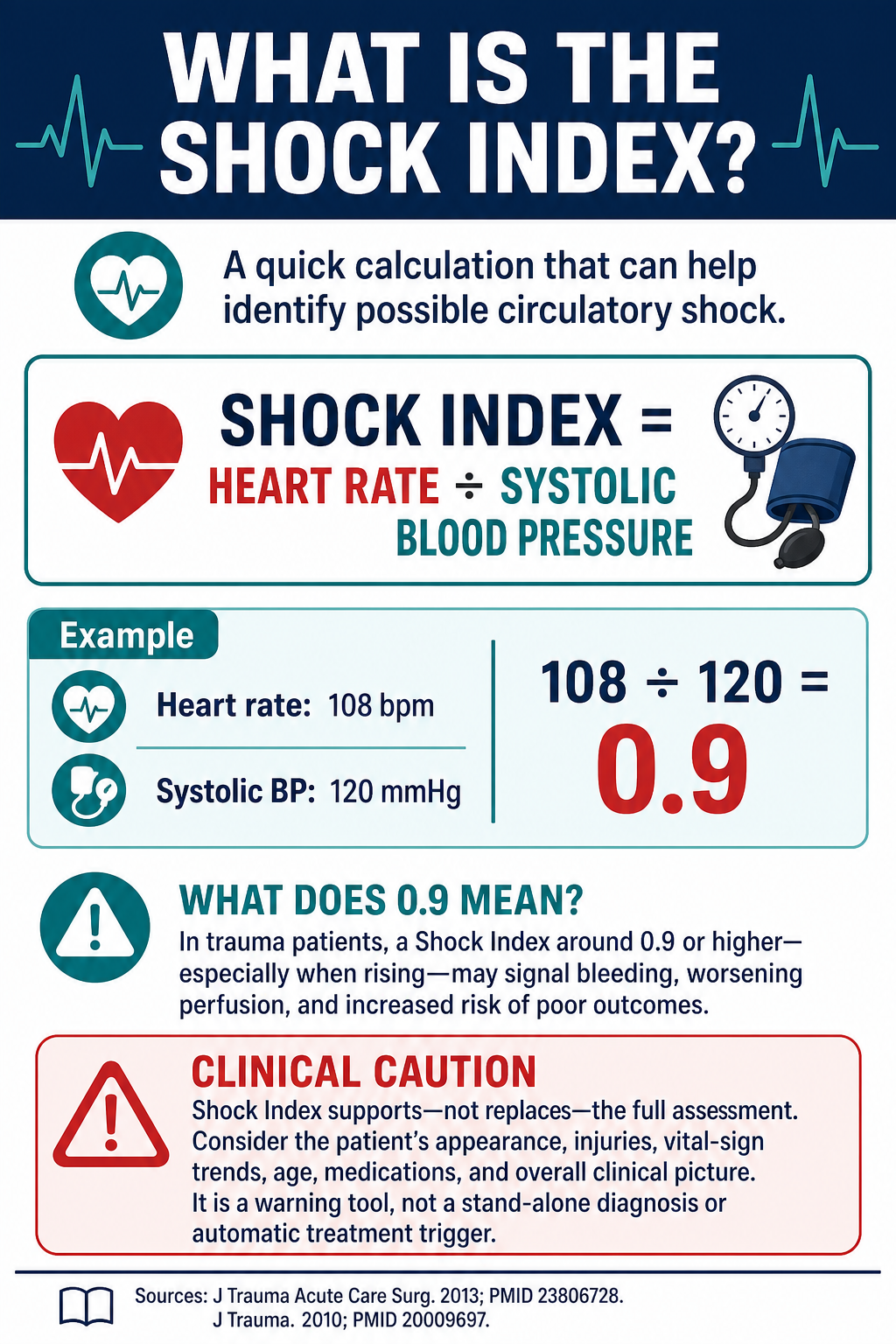
Providers must resist explaining away concerning findings. A rising heart rate may be attributed to anxiety, pain, or summer heat. An automated blood pressure may look acceptable even though the patient appears pale, diaphoretic, and poorly perfused. When the monitor does not match the clinical picture, clinicians should investigate further.
The goal is to recognize the trend before the patient collapses.
Although trauma accounts for most of the system’s blood administrations, blood may also benefit patients with gastrointestinal or variceal bleeding. In a community with a significant older population and long transport times, that capability has implications far beyond motor vehicle crashes.
RSI Requires More Than Intubation Skills
Rapid sequence intubation is another valuable but high-risk capability. The agency performs approximately 100 to 110 RSIs annually and limits the procedure to a small, competency-based group of experienced paramedics.
Restricting the provider pool helps those clinicians receive more repetitions. It also recognizes an uncomfortable reality: a rarely performed procedure involving sedation, paralysis, and airway management cannot be treated like an ordinary standing order.
Two paramedics must be present for RSI. One manages the airway procedure while the other remains responsible for the rest of the patient. This reduces cognitive overload and helps prevent tunnel vision.
The airway is important, but it is not the entire patient.
A trauma patient may also need blood and hemorrhage control. A critically ill medical patient may require hemodynamic support, treatment of the underlying disease, and careful ventilator management. Becoming fixated on placing a tube can cause providers to overlook the condition that made the airway necessary.
Hypoxia and hypotension are among the primary dangers associated with RSI. The agency emphasizes preparation, preoxygenation, patient optimization, appropriate medication selection, and a clear rescue plan.
Sometimes the best decision is not to intubate in the field. If the ambulance is five minutes from the hospital, the RSI paramedic may provide greater value by optimizing oxygenation, supporting circulation, contacting the receiving team, and preparing the patient for immediate hospital airway management.
An RSI clinician should therefore be more than a technician who places tubes. That person should bring calm, perspective, and the ability to evaluate the entire situation.
Finding a Place for Prehospital Ultrasound
Ultrasound is still an emerging capability within the system. Rather than distributing the devices to every clinician, the agency uses a smaller group of “super users” who receive additional education and practice.
Potential applications include identifying cardiac activity during arrest, evaluating suspected pseudo-PEA, detecting B-lines in pulmonary edema, supporting the assessment of undifferentiated respiratory distress, and looking for free fluid after trauma.
Ultrasound can be particularly useful in loud environments where lung sounds are difficult to hear. It may offer additional information when a patient has histories of both COPD and congestive heart failure and the cause of the current respiratory distress is unclear.
However, ultrasound does not replace a careful assessment. It should not delay treatment or create false reassurance.
The agency is cautious about using an uncertain image to determine a high-risk intervention. If the overall presentation strongly suggests a tension pneumothorax, for example, questionable lung sliding should not prevent necessary treatment.
Providers record ultrasound loops for later review. Sharing those images helps the group improve probe placement, recognize useful views, and determine where the technology truly benefits patients.
That review process matters because ultrasound carries an indirect risk: distraction. Every minute spent trying to obtain an image consumes attention that might be needed elsewhere. A new diagnostic tool earns its place only when the information changes or strengthens patient care.
From Following Protocols to Exercising Judgment
Advanced interventions require a different understanding of the paramedic’s role.
Protocols remain essential, especially for newer providers. They establish boundaries, reduce cognitive load, and offer a safe framework during stressful calls. Experience should then help clinicians understand how to operate within that framework.
A respiratory guideline may include bronchodilators, steroids, magnesium, CPAP, and advanced airway management. That does not mean every respiratory patient needs every available treatment. The provider must determine which interventions fit the patient’s condition and trajectory.
Michael describes protocols as the bookends of care. They establish the limits, but the clinician still has to think within them.
This shift also requires providers to consider the entire continuum of care. The value of an intervention may not be visible during the short time EMS spends with the patient. Early blood or antibiotics may not produce an immediate transformation, but they may reduce mortality, shorten hospitalization, or improve recovery.
Clinical maturity means asking more than, “Did my treatment change the next set of vital signs?” It means asking, “Did my treatment improve where this patient will be hours or days from now?”
What Exceptional Providers Do Differently
Technical skill alone does not make an exceptional EMS clinician.
Michael believes the best providers remain willing to learn from every encounter. They accept feedback without automatically interpreting it as a personal attack. Most importantly, they remember that the person in front of them is more than a procedure, diagnosis, or report number.
One of the calls that has stayed with Michael involved a teenager trapped after a devastating motor vehicle crash. Firefighters completed a rapid extrication, and the EMS team began moving almost immediately because the patient needed more than they could provide at the scene.
Based on the severity of his injuries, survival seemed unlikely.
About a year later, Michael was invited to meet the patient during a hospital “victory lap.” The young man was walking, talking, participating in rehabilitation, and returning to his community.
That outcome captures the real purpose of clinical expansion. Blood, ultrasound, and RSI are not achievements by themselves. Their value comes from giving critically ill and injured people a better chance to survive, recover, and return home.
The future of EMS will bring more technology and greater responsibility. But its success will still depend on clinicians who can combine advanced capabilities with sound judgment, humility, teamwork, and compassion.
That is where EMS is heading—and where its greatest potential lies.

Host
Jason Falvey, NRP, is an EMS Battalion Chief and the creator and host of the In-Service EMS Podcast. With more than 30 years in emergency medical services, he has built a career spanning frontline paramedicine, clinical quality, countywide operations, regulatory compliance, business development, and executive leadership across multiple states.
Jason’s experience in high-stakes environments began well before his EMS career. As an accomplished sailor and divemaster, he participated in underwater search-and-recovery and salvage operations in the North Atlantic. That perspective now informs In-Service, where he brings EMS professionals together for candid conversations about leadership, clinical judgment, innovation, workplace culture, and the realities of prehospital care.
Flight Paramedic & Helicopter EMS: What Every EMS Provider Should Know