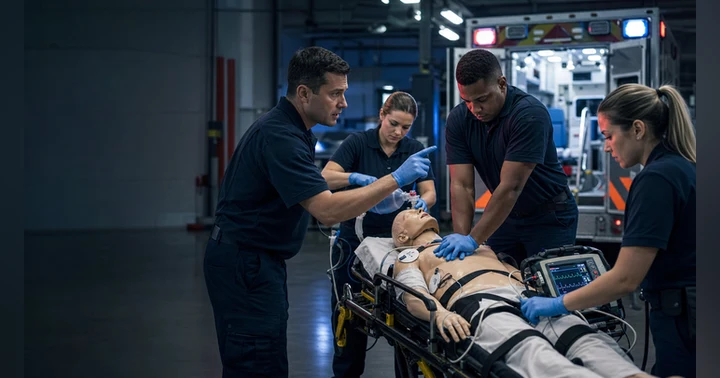
Redefining EMS as Healthcare with Israel Contreras
More Than Lights and Sirens: Israel Contreras on Redefining EMS as Healthcare
For decades, emergency medical services have operated under a familiar model: someone calls 911, an ambulance responds, and the patient is transported to a hospital.
Israel Contreras believes EMS can—and must—do more.
In this episode, Israel discusses the transformation of EMS from a response-and-transport system into a more complete healthcare system. Drawing on more than 20 years in the field, including 18 years as a paramedic, he offers a vision built around a simple question:
What does this patient actually need?
Moving beyond “you call, we haul”
The traditional EMS system was designed primarily to transport patients to emergency departments. Reimbursement models reinforced that approach by frequently treating ambulance services as transportation providers rather than healthcare providers.
But paramedics and EMTs do far more than give patients a ride.
They stop bleeding, treat dangerous heart rhythms, administer medications, manage airways, identify strokes and heart attacks, and keep critically ill patients alive. They also evaluate people whose medical needs are real but do not necessarily require an emergency department.
Israel argues that EMS should be understood as out-of-hospital healthcare—not merely prehospital care. The distinction matters because a hospital does not need to be the destination for every patient.
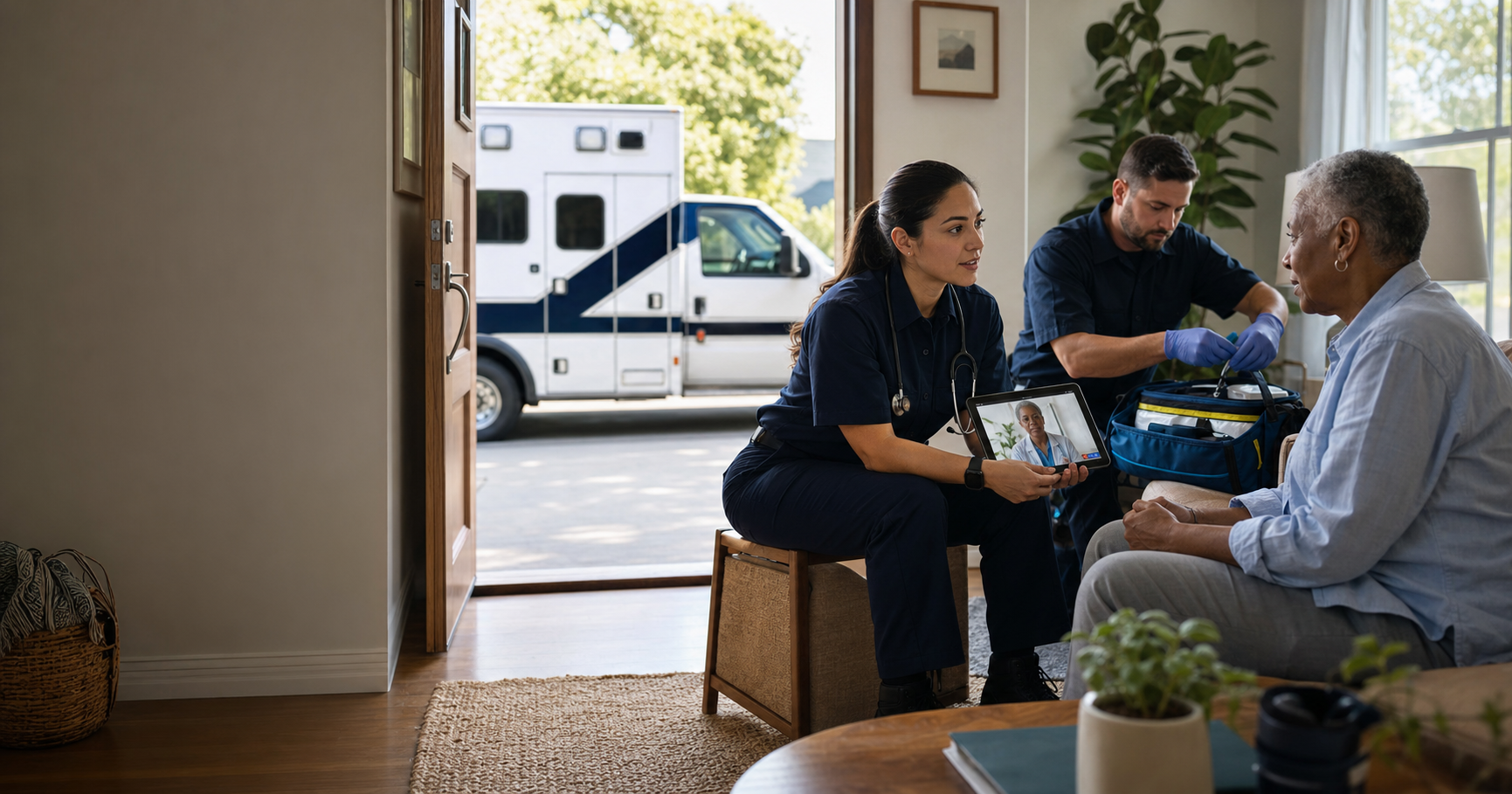
Someone with a non-emergency condition may need a conversation with a nurse, a telehealth consultation, an urgent care appointment, a prescription refill, transportation to a pharmacy, or follow-up care at home.
The goal is not to deny care. It is to connect each patient with the right care.
“Everybody’s problems matter,” Israel says. But when emergency resources are occupied by calls that could be handled another way, those resources are unavailable for life-threatening emergencies.
Building smarter EMS systems
Transforming EMS requires more than launching a single program. It means examining the entire system, from the initial 911 call through the completion of patient care.
Call centers can identify patients who may be better served by a nurse consultation than an immediate ambulance response. Dispatch systems can use traffic conditions and historical patterns to position resources more effectively. Different levels of EMS personnel can then be matched with calls appropriate to their capabilities.
In a tiered system, for example, ambulances staffed by EMTs may handle appropriate lower-acuity calls while paramedics respond to patients requiring advanced care. If a patient is more seriously ill than initially reported, the EMT crew can request assistance or begin transport and meet a paramedic en route.
This model uses resources efficiently while empowering EMTs to practice at the full level of their training.
Solutions must also reflect the community. A model designed for a dense urban area may not work in a rural region with fewer hospitals and longer travel distances. In those communities, telehealth, mobile integrated healthcare, expanded scopes of practice, and air medical resources may play larger roles.
The guiding principle is consistent: every EMS system should regularly examine whether its current design still serves its community.
“You can’t just set a rule and forget it,” Israel says. “You have to evaluate it. Is this still working? And you have to be able to say, ‘This idea didn’t work. Let’s learn from it and try something new.’”
Reducing inefficiency and burnout
Hospital wall times remain one of the greatest obstacles facing EMS. When crews spend extended periods waiting to transfer patients to emergency departments, ambulances become unavailable for new calls.
These delays reflect problems throughout healthcare. Emergency departments are crowded, hospitals may lack efficient discharge transportation, and some communities are losing hospitals altogether. Meanwhile, EMS professionals remain responsible for patients while calls accumulate elsewhere.
Israel describes one transformed system in which paramedics had previously spent approximately 80% of their time assigned to calls. That left almost no opportunity to eat, complete documentation, or mentally reset between patients.
After changes that included improved deployment, additional unit hours, alternative care pathways, and collaboration with hospitals, the workload fell to approximately 50%.
That breathing room is not a luxury. It is a patient-safety measure.
“An exhausted mind makes mistakes,” Israel says.
Fatigue becomes more dangerous when providers work excessive hours or move continuously between calls without time to recover. A transformed EMS system must protect its workforce so clinicians are ready when a critical call arrives.
Using innovation responsibly
Israel sees enormous potential in emerging EMS technology.
Data can help systems anticipate call volume, identify geographic patterns, position units, and find gaps in coverage. Dispatch software can determine which ambulance has the fastest route to an emergency instead of relying solely on physical distance.
AI-assisted documentation may also reduce the time crews spend completing patient reports. With appropriate safeguards, technology could collect information during a call and prepare a draft report for the clinician to review.
Other possibilities are more ambitious. Drones could deliver defibrillators or blood to locations conventional vehicles cannot reach quickly. Point-of-care ultrasound could help paramedics identify internal bleeding and give hospitals earlier notice that a patient may require surgery.
Israel has helped support the deployment of prehospital whole blood in a metro-area EMS system. The program required analyzing patient data, identifying geographic clusters, finding a blood-bank partner, selecting a deployment model, training a focused group of paramedics, and reviewing every administration. It reached 100 blood administrations within its early months.
Technology, however, must be introduced responsibly. AI-generated documentation requires human review, while new clinical tools demand education, practice, and quality assurance. Innovation should not be adopted simply because it is exciting.
The real test is whether it solves a problem and improves patient care.
Developing clinicians, not protocol followers
EMS transformation also depends on education.
Israel does not believe every EMT or paramedic needs a college degree to become an excellent provider. He does, however, see value in teaching clinicians how to learn, evaluate information, and understand the science behind their decisions.
A clinician should know more than which medication appears next in a protocol. They should understand why it is appropriate, how it works, and when a patient’s circumstances may require a different approach.
Development cannot end when someone receives a license. Strong systems continue investing in providers through mentorship, field training, clinical review, continuing education, and regular evaluation.
New clinicians should be paired with experienced professionals who remain engaged in the work—not simply exposed to the habits of burned-out employees. The goal is to develop clinicians with sound judgment rather than technicians who merely follow instructions.
Finding a calling in patient care
Israel’s ideas about transformation are grounded in a career spent caring for patients.
Born in the Dominican Republic and raised between Miami and New York, he entered EMS because he wanted to become a firefighter. In South Florida, that meant first training as an EMT and paramedic.
Once he began working with patients, his plans changed.
Israel discovered that he loved the human side of EMS: holding someone’s hand, restoring a sense of calm, and guiding people through what may be the worst day of their life.
Today, he serves as a manager of EMS Transformation and Innovation. He describes the position as a long-winded way of saying that he looks for problems and helps develop solutions.
A lesson that never left him
One call early in Israel’s career continues to influence his outlook.
He was assigned to transport a 12-year-old boy home from the hospital. The child was nearing the end of his life, and the journey would take four hours. Israel expected the boy’s mother to spend the ride comforting her son.
Instead, the child comforted her.
He reassured his mother that she had been a wonderful parent. He asked her not to remain sad forever and encouraged her to care for his siblings as lovingly as she had cared for him.
The child’s compassion left a permanent impression on Israel. In the middle of his own suffering, the boy was thinking about someone else.
“If this kid, in his worst moment, can be thinking about somebody else,” Israel recalls, “how dare I complain about the little things?”
The experience reinforced a principle that guides Israel’s work: healthcare begins with recognizing the person in front of you and responding to what that person needs.
Caring for the caregivers
That human-centered approach also applies to EMS professionals.
For years, emergency responders were expected to absorb traumatic experiences without acknowledging their effects. Providers joked about difficult calls, buried their reactions, and were told to toughen up.
That culture is changing, but resources are only one part of the solution. Leaders must know their people well enough to recognize when someone is struggling.
Sometimes support means connecting a provider with professional care. Sometimes it means listening without judgment, providing time to process a difficult call, or telling them to go home and be with their family.
Providers must also take responsibility for their well-being. Like the safety instructions on an airplane, caregivers must secure their own oxygen before they can effectively help someone else.
The future is already taking shape
In Israel’s vision, EMS becomes a healthcare access point capable of serving people across the full spectrum of need.
Some patients will receive advice about their medications. Others will be connected with primary care, urgent care, or mental health services. Critically ill patients will receive advanced treatment—including blood—before reaching a hospital.
Getting there will require changes in reimbursement, regulation, public understanding, and professional advocacy. It will also require collaboration among ambulance services, fire departments, communication centers, hospitals, government agencies, and technology companies.
Most importantly, frontline providers must participate.
“If something is broken, speak up,” Israel says. “Say, ‘This is broken, and I have an idea for how we can fix it.’ We need collaboration to change this for the better. Our patients deserve the best.”
EMS has always been more than lights, sirens, and transportation. Its future lies in fully embracing what its professionals already provide: healthcare wherever the patient happens to be.

Host
Jason Falvey, NRP, is an EMS Battalion Chief and the creator and host of the In-Service EMS Podcast. With more than 30 years in emergency medical services, he has built a career spanning frontline paramedicine, clinical quality, countywide operations, regulatory compliance, business development, and executive leadership across multiple states.
Jason’s experience in high-stakes environments began well before his EMS career. As an accomplished sailor and divemaster, he participated in underwater search-and-recovery and salvage operations in the North Atlantic. That perspective now informs In-Service, where he brings EMS professionals together for candid conversations about leadership, clinical judgment, innovation, workplace culture, and the realities of prehospital care.
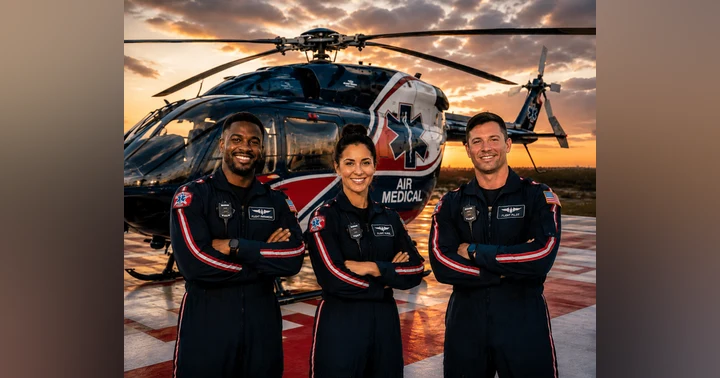
Flight Paramedic & Helicopter EMS: What Every EMS Provider Should Know