Rethinking EMS
Rethinking EMS: Innovation, Leadership, and the Four-Minute Community
Emergency medical services has spent decades perfecting its ability to respond quickly, stabilize patients, and transport them to the hospital. But what happens when the traditional response model no longer matches the needs of every patient or community?
Patrick Flaherty, Division Chief of EMS and Training for the Sandy Springs Fire Department, believes EMS leaders must be willing to ask that question. In this episode of the In-Service EMS Podcast, Patrick shares how Sandy Springs is approaching community paramedicine, low-acuity 911 calls, cardiac-arrest response, clinical feedback, provider development, and organizational culture.
His message is clear: EMS cannot solve every problem by simply adding more ambulances. Sometimes the better solution is to understand why the patient called and connect that person with the right care.
Every Patient Contact Is a New Patient Contact
Patrick’s career in emergency services began in Mississippi, where his father served as a county fire chief. He became an EMT in 1991 and went on to work as a firefighter, paramedic, educator, Marine Corps veteran, tactical medic, police officer, and EMS leader.
Despite that experience, one of his most important lessons came from a call involving a patient he knew well.
The patient was a homeless man with chronic alcohol-use issues whom crews encountered several times a week. When Patrick found him unconscious behind a store, the presentation seemed familiar. The patient smelled of alcohol and was covered in vomit, so Patrick allowed a new paramedic to take the lead while he focused on other work.
Then the new paramedic found a blood pressure of 260/140.
A closer assessment revealed a depressed area on the back of the patient’s head and a blown pupil. The man had reportedly been struck with a pipe and suffered devastating brain injuries.
For Patrick, the call became a lasting reminder about complacency and confirmation bias. Familiar patients do not always have familiar emergencies. Regardless of how many times someone has called 911, every encounter deserves a complete assessment and a fresh set of eyes.
Moving Beyond “You Call, We Haul”
Sandy Springs has examined how a relatively small group of people can generate a disproportionate number of emergency responses. Instead of treating each call as an isolated event, its community paramedicine program looks for the underlying problem.
In many cases, the issue is not a complete lack of resources. Patients may not know how to access transportation, medical appointments, home care, or other services already available to them. Community paramedics can meet with these patients, identify their needs, provide education, and help them navigate the healthcare system.
The city has also added an opioid outreach role to follow up after suspected or confirmed overdoses and help connect people with treatment.
This approach recognizes a basic reality: repeatedly transporting someone to the emergency department may address the immediate call without solving the reason that person continues to call 911.
Finding the Right Response for the Patient
Sandy Springs also uses RightSite, a service that connects appropriate low-acuity callers with emergency physicians by telephone or video.
After a caller goes through an established triage process, certain complaints may be referred to a physician instead of receiving an automatic ambulance response. The physician can evaluate the patient, prescribe medication when appropriate, arrange delivery, help secure a medical appointment, or recommend transportation to a more suitable care setting.
Safeguards remain in place. If new information suggests a potentially serious condition, the call can be returned to the dispatch center and emergency resources can be sent.
Patrick acknowledges that the greatest obstacle is often cultural. For decades, the public has been taught that calling 911 results in an ambulance and a trip to the hospital. Introducing other options requires education, trust, and time.
Building a Four-Minute Community
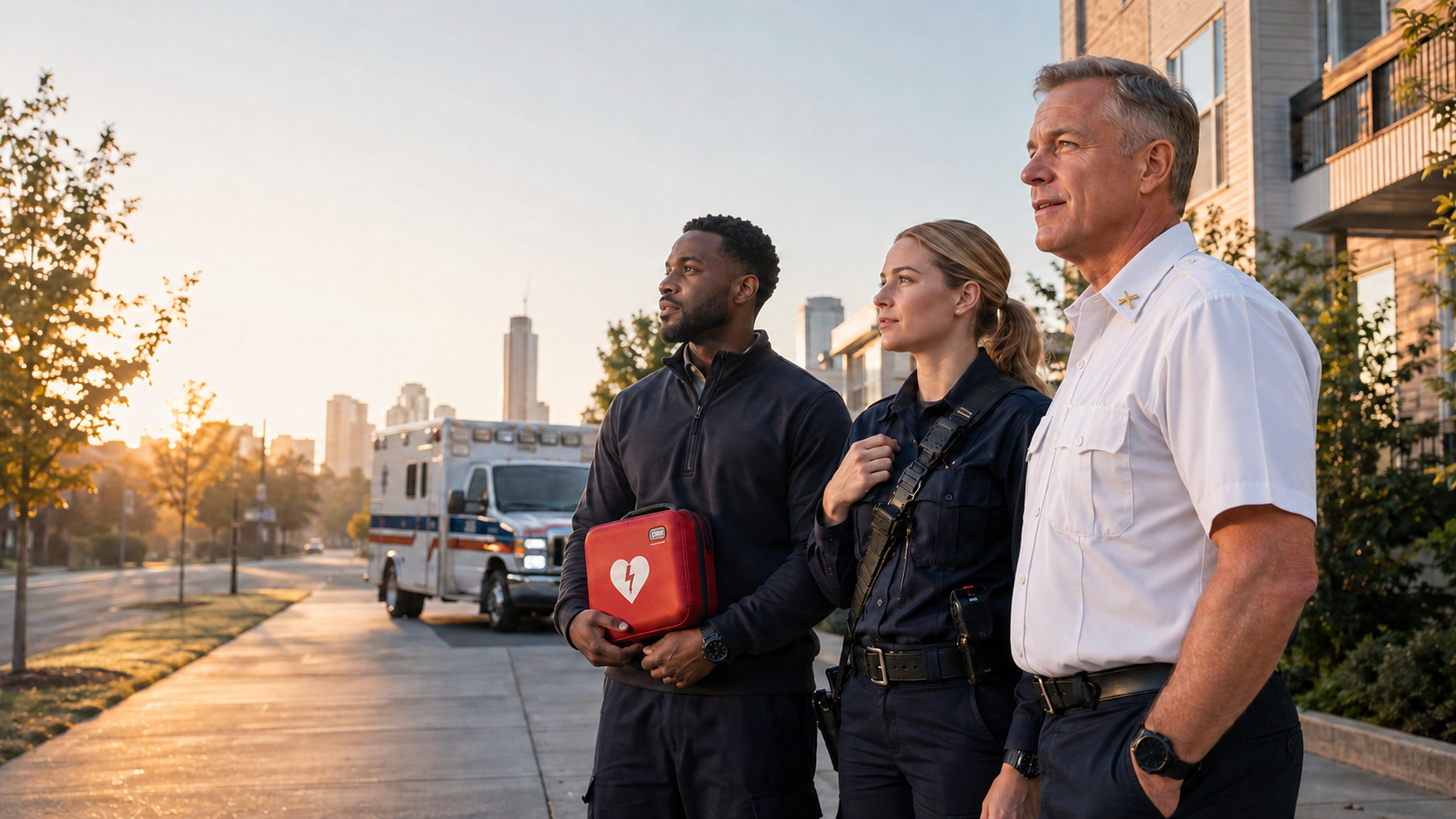
One of the most innovative programs discussed in the episode is the Four-Minute Community, which places connected AEDs with trained civilian volunteers throughout Sandy Springs.
When dispatchers identify a nearby cardiac arrest, the AED can activate and alert the volunteer. A screen provides directions to the emergency, while the 911 center can track the device’s location. The caller is also told that a trained neighbor carrying an AED may be approaching.
The goal is not to replace firefighters, paramedics, or ambulance crews. It is to close the critical gap between collapse and defibrillation.
In cardiac arrest, minutes matter. Even a strong EMS system cannot place a crew on every street corner, but a trained neighbor may already be only a few houses away. The Four-Minute Community turns public access defibrillation from a passive resource into an active response network.
Learning From Near Misses
Innovation is not limited to new technology or alternative response programs. It also includes how an organization responds when something goes wrong.
Patrick believes too many EMS agencies approach near misses punitively. Instead of beginning with blame, leaders should ask why the mistake occurred. Was it a training problem? Was equipment missing or malfunctioning? Did a process create an opportunity for failure? Was the provider affected by fixation or an incorrect assumption?
Accountability still matters, particularly when mistakes become repetitive. But a provider who recognizes an error, accepts responsibility, and learns from it is someone the organization can continue to develop.
Patrick describes a case in which a paramedic became fixated on chest pain and treated a patient for a myocardial infarction despite classic signs of an aortic dissection. The patient survived, but the potential consequences made the case just as important as one involving a poor outcome.
A near miss is not evidence that nothing went wrong. It is an opportunity to correct a problem before the next patient is harmed.
Leadership Requires Explaining Why
Patrick also discusses the importance of psychological safety and open communication. Personnel should be able to raise concerns, question a process, or bring a better idea forward regardless of rank.
That does not mean leaders must approve every request. Sometimes the answer is no. The leader’s responsibility is to be honest, explain the reasoning, and avoid creating false expectations.
Patrick warns against leadership built around a “default no.” If an employee proposes an improvement that is safe, practical, and does not create unnecessary expense, leaders should be willing to make the change.
Explaining why a decision was made gives people a sense of ownership. It can also expose weaknesses in the original plan and allow the people doing the work to improve it.
The Most Important Tool in EMS
During the episode’s lightning round, Patrick identifies the medic’s brain as the most underrated piece of equipment in EMS.
Protocols, monitors, and technology are essential, but they cannot replace critical thinking. Patients do not always present in a predictable order, and the right decision may require a clinician to adapt rather than follow a simple sequence.
That idea connects the entire conversation. Rethinking EMS is not about chasing every new product or program. It is about examining the problem, challenging assumptions, learning from experience, and selecting the response that best serves the patient.
Listen to the full episode of the In-Service EMS Podcast to hear Patrick Flaherty discuss the Four-Minute Community, community paramedicine, smarter 911 response, clinical improvement, and the leadership required to move EMS forward.
Host
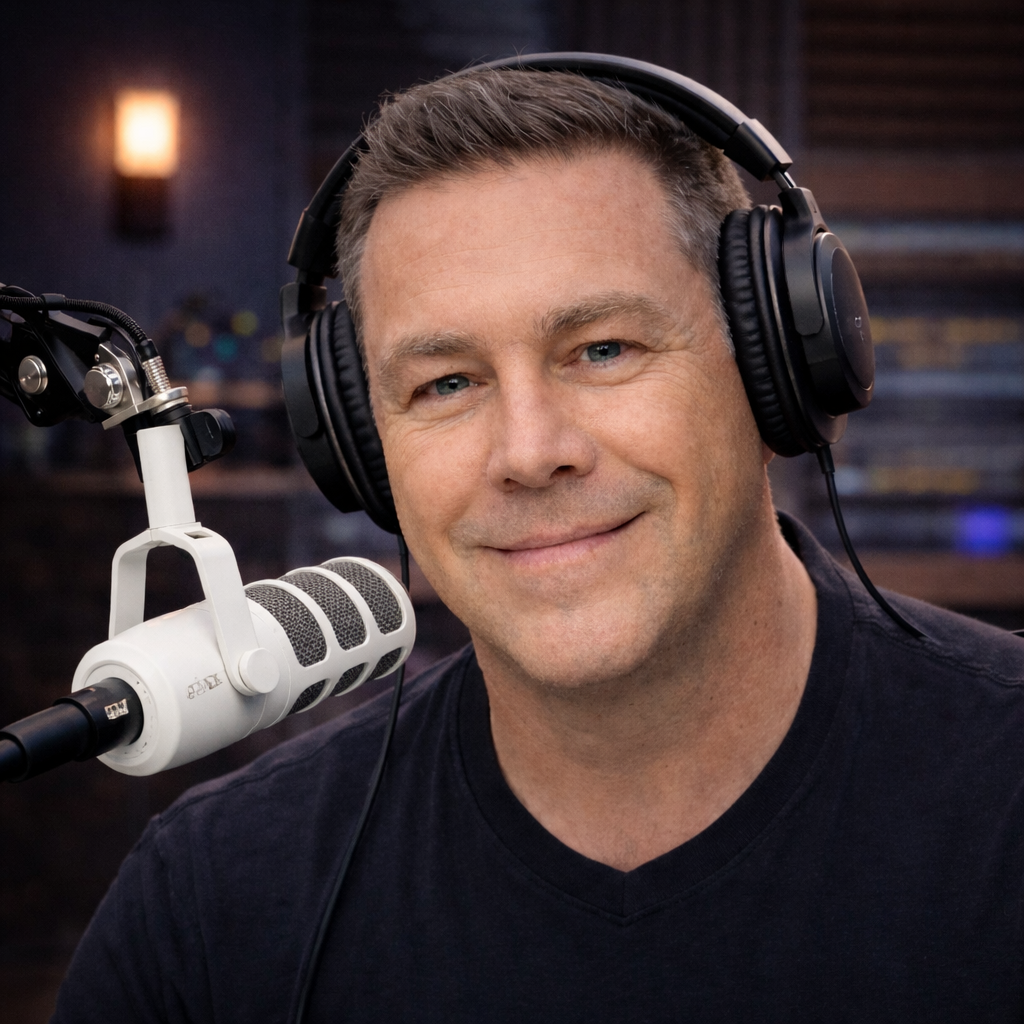
Jason Falvey, NRP, is an EMS Battalion Chief and the creator and host of the In-Service EMS Podcast. With more than 30 years in emergency medical services, he has built a career spanning frontline paramedicine, clinical quality, countywide operations, regulatory compliance, business development, and executive leadership across multiple states.
Jason’s experience in high-stakes environments began well before his EMS career. As an accomplished sailor and divemaster, he participated in underwater search-and-recovery and salvage operations in the North Atlantic. That perspective now informs In-Service, where he brings EMS professionals together for candid conversations about leadership, clinical judgment, innovation, workplace culture, and the realities of prehospital care.
Flight Paramedic & Helicopter EMS: What Every EMS Provider Should Know